Foundation of Infant Gut Health
The Infant Microbiome Institute created this page as a calm, science-based starting point for understanding your baby’s gut. It’s written for both parents and pediatric teams who want clear explanations—not hype or fear.
This page offers general education, not personal medical advice. Always partner with your child’s own clinicians for decisions about tests, treatments, or feeding changes.
What do We Mean by “Infant Microbiome”?
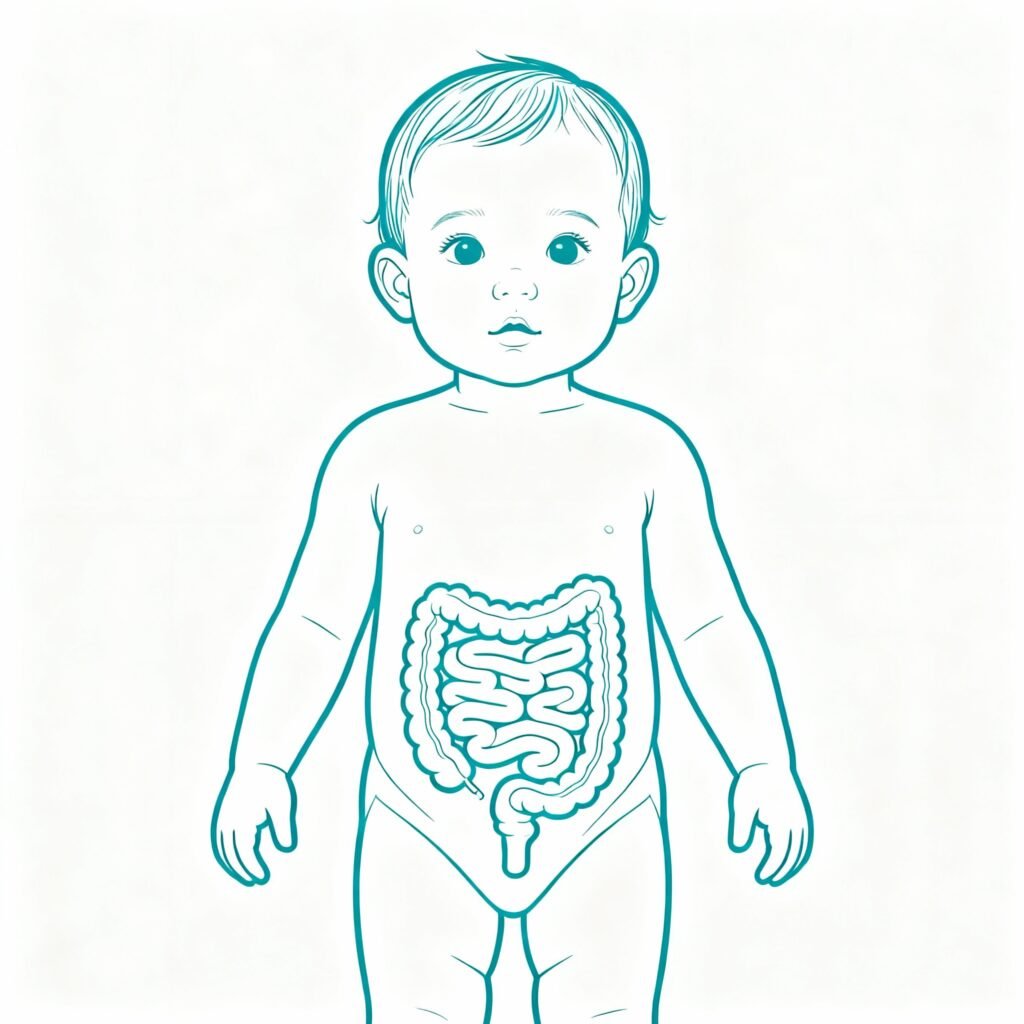
When we say “infant microbiome,” we’re talking about all the tiny organisms that live in and on a baby’s body—especially in the gut. This community includes bacteria, viruses, and fungi, plus all of their genes and the substances they produce.
Most of these microbes are not “germs” in the scary sense. Many of them help digest food, support growth, train the immune system, and protect against harmful infections over time. The goal isn’t to have a “perfect” mix, but to support a stable, flexible ecosystem as your baby grows.
Clinician Corner – Framing the Infant Microbiome
For learners, we frame the infant microbiome as a dynamic ecosystem and immune training ground rather than a static list of “good” and “bad” bacteria. Key themes include barrier function, immune education (tolerance vs inflammation), metabolite production (SCFAs, vitamins), and colonization resistance. Emphasize concepts and functions over specific taxa for non-specialist audiences.
Why Early Life Matters So Much
Patterns that form during this time can influence things like digestion, infection risk, allergy and eczema, and possibly even metabolic and neurodevelopmental outcomes later in life. These patterns are not destiny, but they can tilt risk in one direction or another.
The first months and years of life are a time of rapid change for a baby’s gut and immune system. Microbes are moving in, sorting themselves out, and “teaching” the body what to tolerate and what to fight.
Clinician Corner – “First 1000 Days”
For teaching, you can connect this with the “first 1000 days” concept and critical windows: perinatal, early infancy, and complementary feeding. Emphasize that most microbiome–outcome data are associative, must be interpreted alongside confounders (diet, antibiotics, delivery context, social determinants), and should not be framed as deterministic predictions for individual children.
How the Infant Gut Microbiome Develops Over Time
Before Birth & Birth day
Before birth, a baby’s gut has very few microbes. The first big “seeding” happens during birth, when babies are exposed to microbes from the birth canal, skin, air, and the hospital or home environment.
First Days to 3 months
In the first weeks, feeding patterns and early medical care play a big role. Human milk, donor milk, and formulas create different “food supplies” for gut microbes. Skin-to-skin contact, rooming-in, and antibiotics (when needed) also shape which microbes settle in.
3 to 12 Months
As babies grow and start solid foods, more types of microbes appear. Fiber-rich foods, varied textures, and exposure to the home environment add diversity. Stools and digestion may change as the gut adjusts to new foods.
Toddler Years
By around age 2–3, the gut microbiome starts to look more like a “mini adult” pattern. It remains flexible and responsive to diet, illness, and environment, but many foundational patterns are already in place.
Clinician Corner – Patterns Not Perfection
When teaching, it can help to normalize variability: not every C-section infant has dysbiosis, and not every exclusively breastfed infant has an “ideal” microbiome. Frame birth mode, antibiotics, and feeding as risk modifiers that interact with genetics, environment, and social context, rather than as single-point causes. This keeps counseling hopeful and avoids deterministic language.
The Major Factors that Shape The Infant Microbiome
Many things influence how a baby’s gut microbiome develops. No single factor tells the whole story, but these four tend to matter most in early life.
Birth Mode
Vaginal birth usually exposes babies to microbes from the parent’s vagina and gut. Cesarean birth often means more exposure to skin and hospital microbes. Both birth modes can be compatible with healthy outcomes, but they start the microbial story in slightly different ways.
Medications & Medical Care
Antibiotics, NICU stays, acid-suppressing medicines, and other interventions can shift the balance of microbes in the gut. Sometimes these treatments are life-saving and absolutely necessary; it just means we may want to think about repair and support afterward.
Feeding
Breast milk, pumped milk, donor milk, and formula each provide different nutrients for gut microbes. Human milk contains complex sugars and other components that “feed” certain helpful bacteria. Modern formulas can support growth and add some of these features, but they are not identical to human milk.
Home & Environment
Skin-to-skin contact, caregivers, siblings, pets, time outdoors, and daycare all add microbial “inputs.” These exposures gradually increase diversity over time and can help the immune system learn to sort normal everyday microbes from true threats.
What’s Normal vs When to call your Pediatrician
Every baby is different, and the microbiome is only one piece of the picture. This list isn’t complete, but it can help you think about when something might be part of a maturing gut versus when to get urgent help.
What’s Normal:
- Soft stools that change color between mustard-yellow, green, and brown in a thriving baby
- Periods of gassiness,
grunting, or noisy digestion - Small amounts of spit-up
in a baby who is otherwise comfortable and gaining weight - Mild, non-oozing rashes that come and go
Call Your Pediatrician if:
- Your baby seems very unwell, unusually sleepy, or hard to wake
- Your baby is breathing fast, working hard to breathe, or looks blue
- Vomit is green (bile-colored) or forceful with every feed
- There is blood in stool
or vomit beyond a tiny streak - There are no we diapers
for many hours or signs of dehydration (very dry mouth, no tears, sunken soft spot)
This list doesn’t cover every situation and doesn’t replace medical advice. If something feels “off,” trust your instincts and contact your child’s clinician or local emergency services.
Everyday Ways to Support Your Baby’s Gut
You don’t have to chase a “perfect” microbiome. Small, realistic choices over time can create a supportive environment for your baby’s gut and immune system.
- Aim for feeding plan that keeps both baby and caregiver nourished—whether that’s breastfeeding, pumped milk, donor milk, formula, or a combination.
- Seek support early (lactation, pediatric team, mental health) if feeding feels overwhelming or unsustainable.
- Use antibiotics thoughtfully, when they’re clearly needed, in partnership with your child’s clinicians.
- Avoid starting and stopping restrictive diets for parents or older children without medical guidance.
- prioritize routine care, vaccines, and a safe environment; the microbiome is one important piece of whole-child health, not the only piece.
Clinician Corner – Counseling Without Guilt
This is a natural place to model guilt-free language around C-sections, antibiotics, and formula. Emphasize modifiable factors, shared decision-making, and the potential for repair (feeding support, skin-to-skin, later diet quality) rather than regret about past decisions that were appropriate at the time.
Microbiome Hype vs Reality
Microbiome science is exciting, but online content can make it sound magical or terrifying. Here are a few grounding ideas.
Common Myths
- “One probiotic can fix everthing”
- “If your baby had antibiotics or a C-section, their health is ruined.”
- ‘Every symptom is a gut problem”
What We Actually Know
- Different strains and products do different things; no single probiotic is right for every baby.
- Early antibiotics and C-section can change patterns, but they do not doom a child to poor health. Repair and resilience are possible.
- Stools, rashes, and behavior are influenced by many things: genetics, environment, sleep, feeding, stress, and more.
Using Microbiome 101 Alongside Your Pediatrician
This page is meant to give you background language and frameworks—not to replace your child’s clinicians. If you find an explanation or diagram here that resonates, you can bring it to visits as a starting point for conversation.
Your pediatrician knows your baby’s full story, including details that can’t be captured on a website. The microbiome is one important lens; shared decision-making and whole-child care are the foundation.
Where to Go Next
- Visit our Parents page for more family-focused guides.
- Visit our Clinicians page for clinical tools and teaching resources.
- Explore Formula & Feeding Science to go deeper into feeding choices.